
TORONTO · ETOBICOKE · GTA
Mosaic & Pattern Tile Installation Toronto
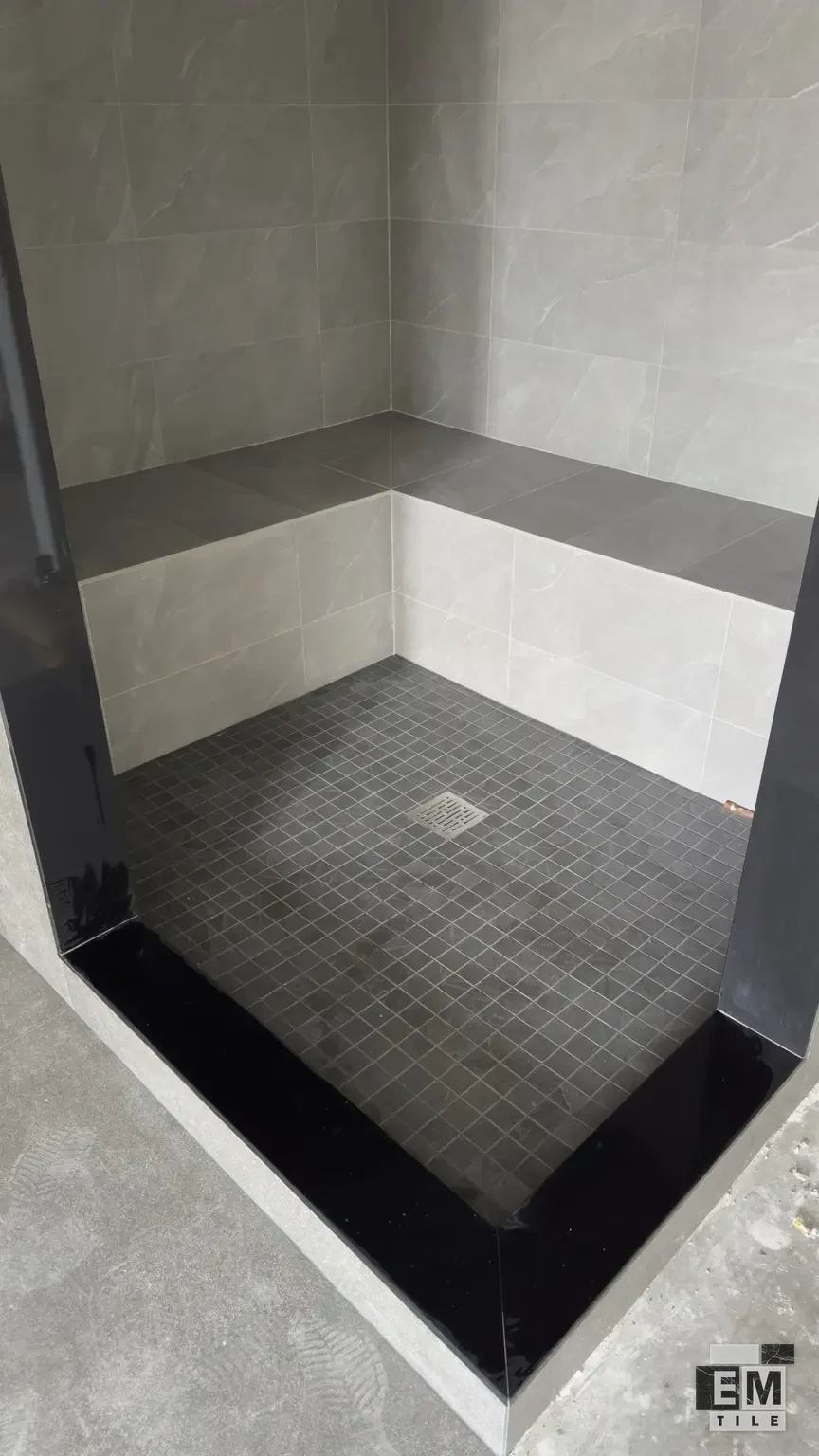
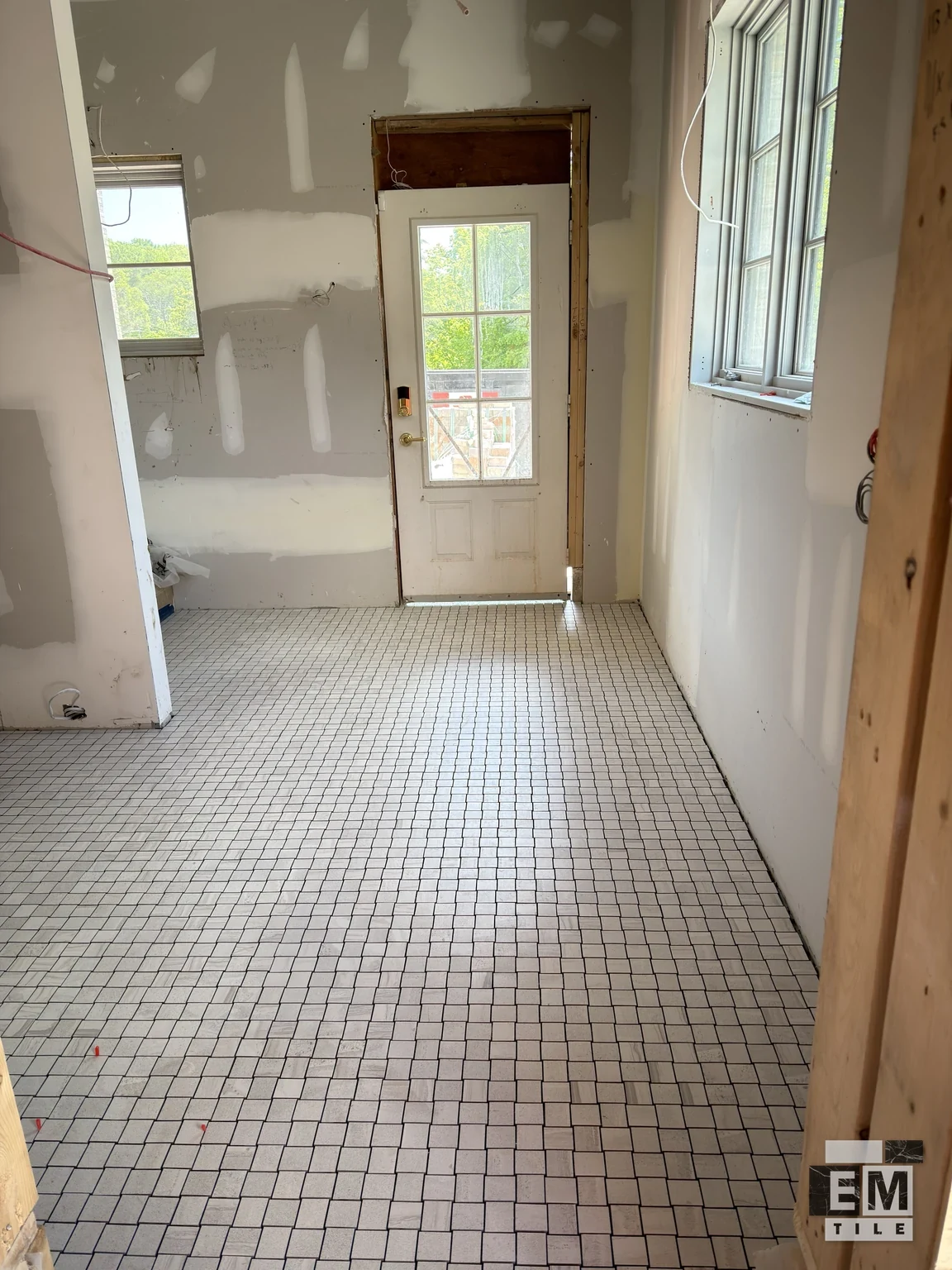
A patterned installation is organised around repeated relationships: the angle of a herringbone, the spacing of mosaic pieces or the rhythm of contrasting colours. EM Tile installs mosaic and patterned tile in Toronto and the GTA. Bring the actual tile or sheet dimensions along with the desired layout, so the pattern can be planned against the real wall or floor rather than treated as a decorative image without boundaries.
Discuss your project ↗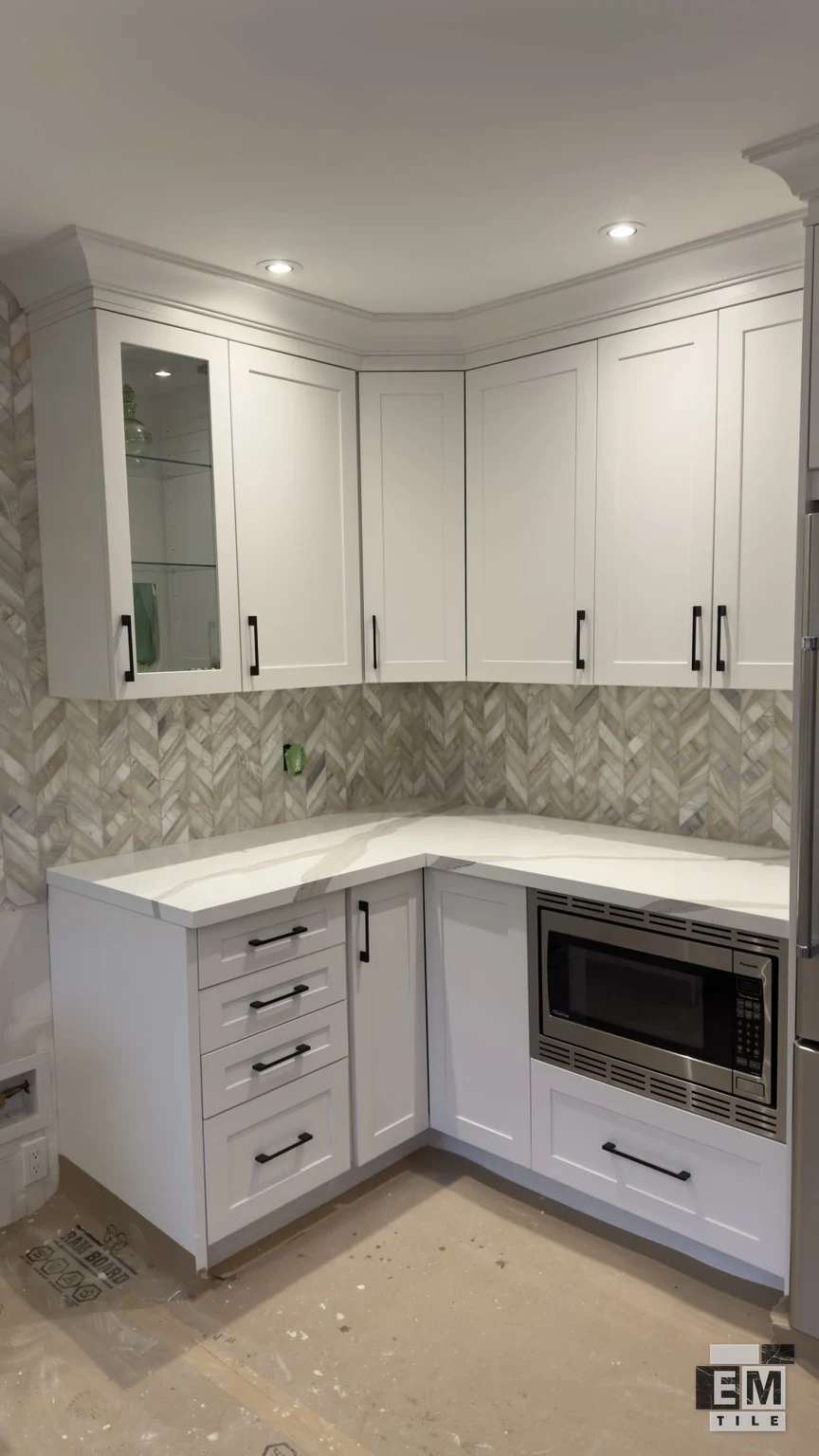
Identify the pattern precisely
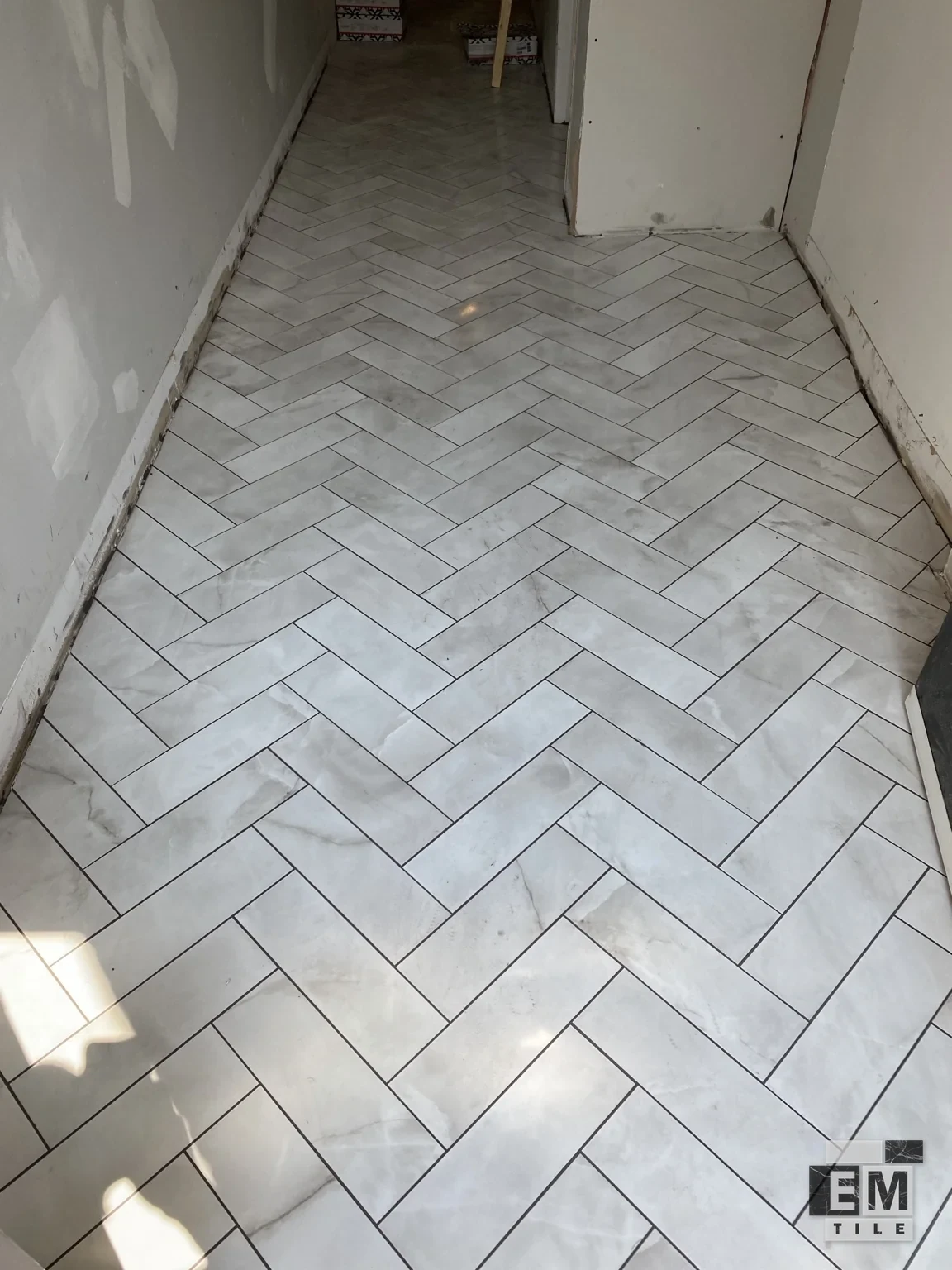
Herringbone, chevron, checkerboard and stacked mosaics create different arrangements. A reference image is useful, but the tile shape and dimensions determine how the pattern can be assembled. Herringbone uses an interlocking arrangement of rectangular pieces; a chevron effect involves a different meeting of angled ends. Checkerboard depends on alternating groups and their proportions. Identify the pattern you mean and the exact product rather than using these names interchangeably. If a supplier's sheet already contains the layout, include its dimensions and a photograph that shows the joints between several sheets together.
Set a direction and starting point for the space
Patterns can lead the eye towards a focal wall, along a corridor or across an entrance. The preferred direction needs to be checked against the width and length available. A centre line at one end of a room can affect the cuts at the other, especially when the walls are not perfectly symmetrical. Mark the important sight line and door positions on the plan. For a backsplash, show the range hood and cabinet ends; for a floor, show adjoining rooms. The repeat is only part of the design, because its relationship to the boundaries defines the final view.
Watch the relationship between mosaic sheets
Sheet-mounted mosaics reduce the handling of individual pieces, but they do not eliminate alignment decisions. The joints where sheets meet should relate to the spacing within them, and a wall opening may cut through several small units. Product construction, surface shape and material influence how the pattern is handled. Review more than one sheet before choosing the overall arrangement. Strong lighting or contrasting grout can make an inconsistent seam more visible. A planned approach considers the entire grid rather than assuming that every sheet edge will automatically disappear into the finished surface.
Decide how the pattern will end
A border can frame a patterned area, but it introduces another transition to measure and lay out. At an exposed edge, small units may leave a different appearance from a cut rectangular tile. Niches, corners, thresholds and shelves can also interrupt the repeat. Identify whether the pattern should continue around a return, stop at a trim or meet a plain field. These choices are especially noticeable where herringbone reaches a cabinet or a patterned floor meets a staircase. A drawing of those boundaries gives the installation discussion more precision than a tile-area total.
Compare grout and material without losing the pattern
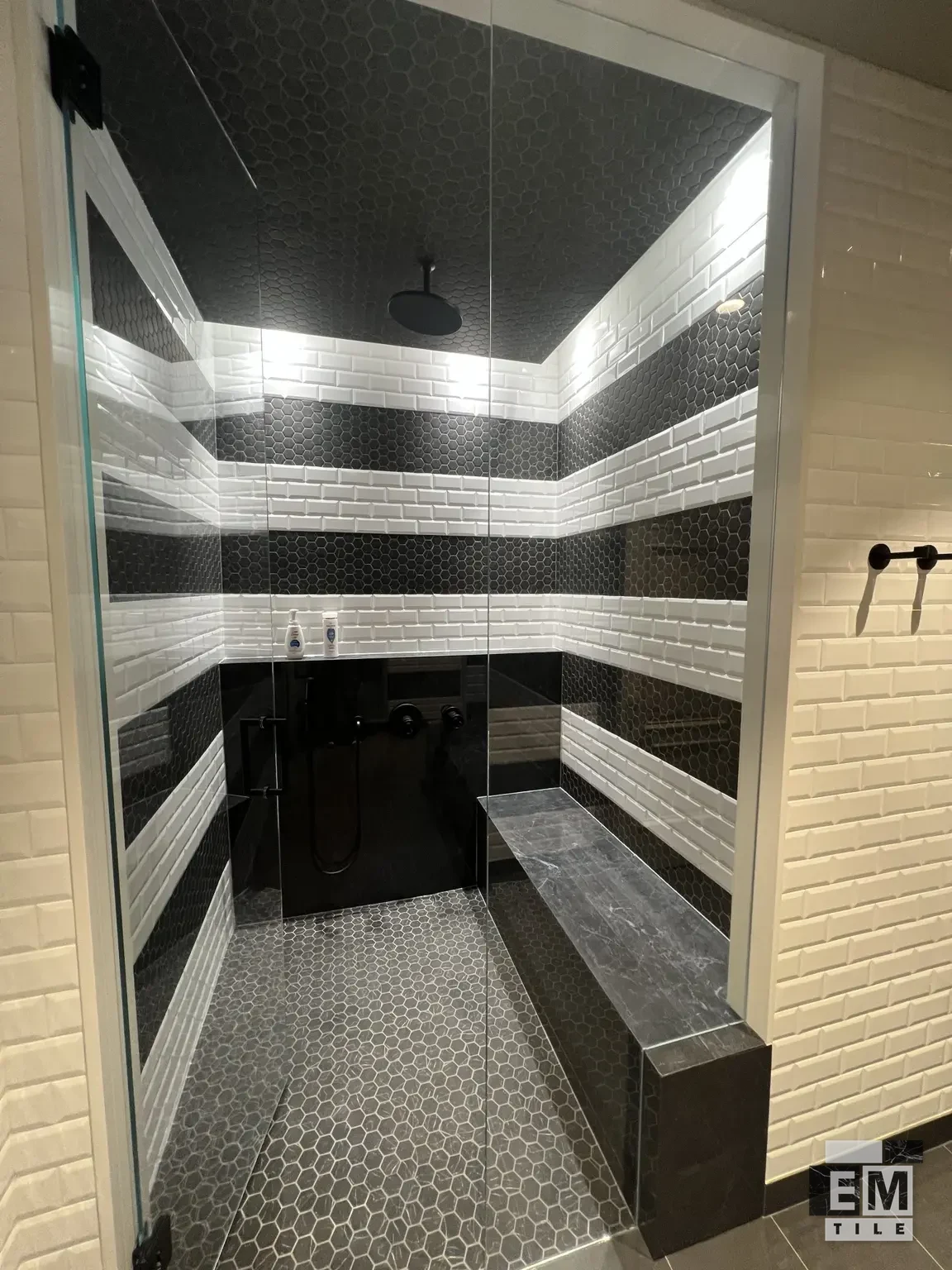
Glass, ceramic, porcelain and stone mosaics can share a similar shape while having different requirements. The product description matters when considering setting and finishing materials. Grout colour also changes how much attention falls on the joint network. A near-match can soften the outline of small pieces; a contrast can make the geometry the main feature. Place a sample of several units beside the proposed grout colour, then view it from normal room distance. The aim is to see the completed repeat, not just the attractiveness of one small decorative piece.
Explain the detail when asking for an estimate
Patterned work can involve more setting-out and cutting decisions than a straightforward grid, even within the same area. Provide a pattern reference, tile or sheet dimensions and photographs of the surface. Add the planned centre line, any borders, exposed ends and features that interrupt the layout. Describe whether the design is a full room, a shower feature, a backsplash or a small inset. The scope depends on those details and on preparation needs. EM Tile can discuss mosaic and pattern installation from a clear layout without assuming that every repeating design takes the same approach. Every installation comes with our Lifetime Workmanship Warranty for as long as the original client owns the home — see the full terms in our FAQ.
Frequently asked questions
How are herringbone and chevron different?
They create different meetings between neighbouring pieces. Herringbone commonly uses rectangular tiles in an interlocking arrangement, while chevron uses an angled meeting to form its repeat. Confirm the product shape and chosen reference so the intended geometry is clear.
Why should more than one mosaic sheet be viewed?
The junction between sheets is part of the finished grid. Several sheets show how their internal spacing and outside edges meet. A single sheet sample can hide alignment issues that become more noticeable across a larger wall or floor.
Does a border change the pattern layout?
Yes. A border introduces an additional boundary and can affect where the main repeat begins or ends. Its width and corners should be shown on the plan. It needs to relate to both the pattern and the room's fixed features.
How does grout colour affect a mosaic?
There are many joints within a mosaic, so the grout can have a strong visual effect. A contrasting colour outlines the small pieces, while a closer colour changes the emphasis. Review a group of units with the proposed colour rather than judging one tile alone.
What should be measured for a patterned backsplash?
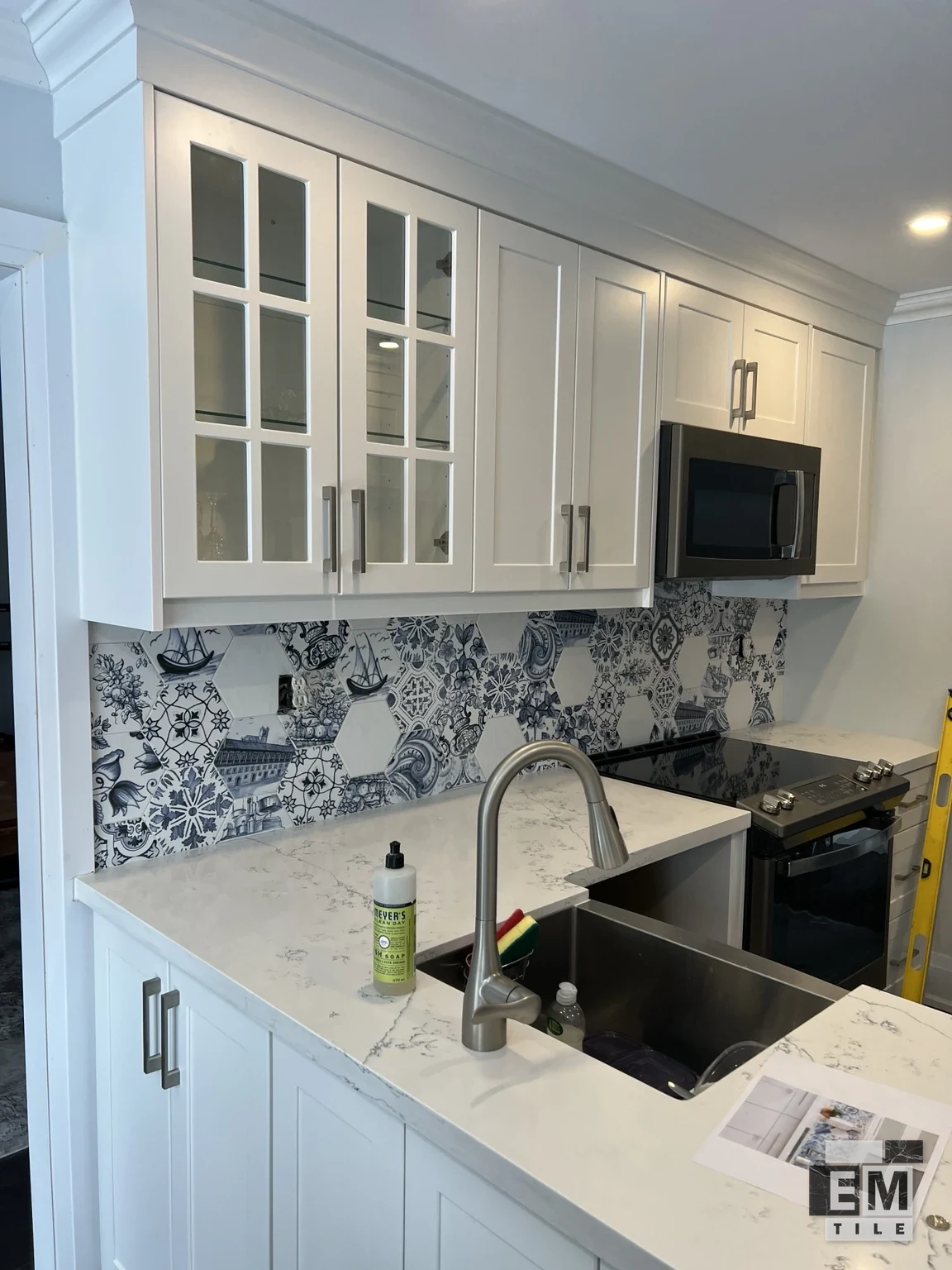
Include the wall lengths, coverage height, outlet openings and exposed ends. Add windows or shelving within the area. Those boundaries establish where the repeat will be interrupted and how its direction relates to the cabinet layout.
How long does mosaic or patterned tile installation typically take?
A mosaic or patterned tile project has no fixed typical timeline. Its size and scope guide the schedule, which we confirm after a site review of the planned work.
Tell us about your project.
Serving Toronto, Etobicoke, North York, Mississauga, Vaughan, King City, Scarborough, Oakville, Burlington and Milton.
Request a quote ↗